Imagine this: you’re the captain of a small business ship navigating the unpredictable seas of commerce. One moment, the waters are calm, and your sails are full, driving you toward prosperity. But without warning, a storm brews on the horizon. This is where small business insurance becomes your lifeline. It’s not just a safety net but a strategic anchor that secures your business’s future against the unforeseen typhoons that might threaten to capsize it.
In the world of business, uncertainty is the only certainty. And while that might sound like a motivational poster cliché, it’s the cold hard truth. From natural disasters to legal disputes, the potential for disruption is vast. That’s why small business insurance isn’t just an option; it’s a necessity. It’s like having an umbrella ready for the rain you hope never comes but know you must be prepared for. Let’s dive into the depths of why this protection is non-negotiable for your business voyage.
Importance of Small Business Insurance
Did you know that 40% of small businesses never reopen after a disaster? It’s shocking, right? Yet most of these businesses could have been saved with the right insurance.
Small business insurance isn’t just a luxury; it’s a necessity. It acts as a safety net, providing your business with the protection it needs to survive unexpected events. Without it, you’re leaving your business vulnerable to lawsuits, theft, and natural disasters.
Safeguarding Business Continuity
When disaster strikes, having insurance can mean the difference between shutting down and staying open. Imagine a fire tearing through your office or a customer getting injured on your premises. Without insurance, you’d be paying out of pocket for repairs or legal fees, which could easily bankrupt your business.
Here is the deal: insurance helps you manage risks that are beyond your control. It ensures that even if the unthinkable happens, you’re equipped to handle it. This means your livelihood is protected, and you can keep your doors open.
Protection from Unexpected Events
You might think, “That won’t happen to me.” BUT, the truth is, unexpected events can happen to any business, at any time. Whether it’s a natural disaster, theft, or liability claim, having insurance ensures that you’re not caught off guard.
Insurance covers the costs of unexpected events so you can focus on what matters most—running and growing your business. Pro Tip: Regularly review and update your insurance policy to match your current business needs.
Financial Implications of Not Having Insurance
The financial burden of not having insurance can be catastrophic. Picture this: a lawsuit that costs thousands, if not millions, in damages. Without insurance, these costs come directly from your pocket, threatening your business’s survival.
Here’s the reality: investing in insurance is a small price to pay compared to the potential financial ruin of not having it. Think of it as a financial shield that guards your hard-earned assets and ensures your business thrives even in tough times.
Types of Small Business Insurance
Did you know that 40% of small businesses never reopen after experiencing a disaster? Insurance can be a lifesaver. But, do you know which types of insurance your business really needs?
Choosing the right insurance can be tricky. Here is the deal: you need to understand your risks and match them to the right policies. Let’s dive into the different types of insurance available for small businesses.
Key Insurance Policies for Small Businesses
You might think insurance is just a safety net, BUT it’s actually a key component of business strategy. From liability to property, let’s look at what each policy covers and how it benefits you.
| Type | Coverage | Benefits | Cost |
|---|---|---|---|
| General Liability | Third-party bodily injury and property damage | Protects against lawsuits, covers medical costs | Varies by location and business size |
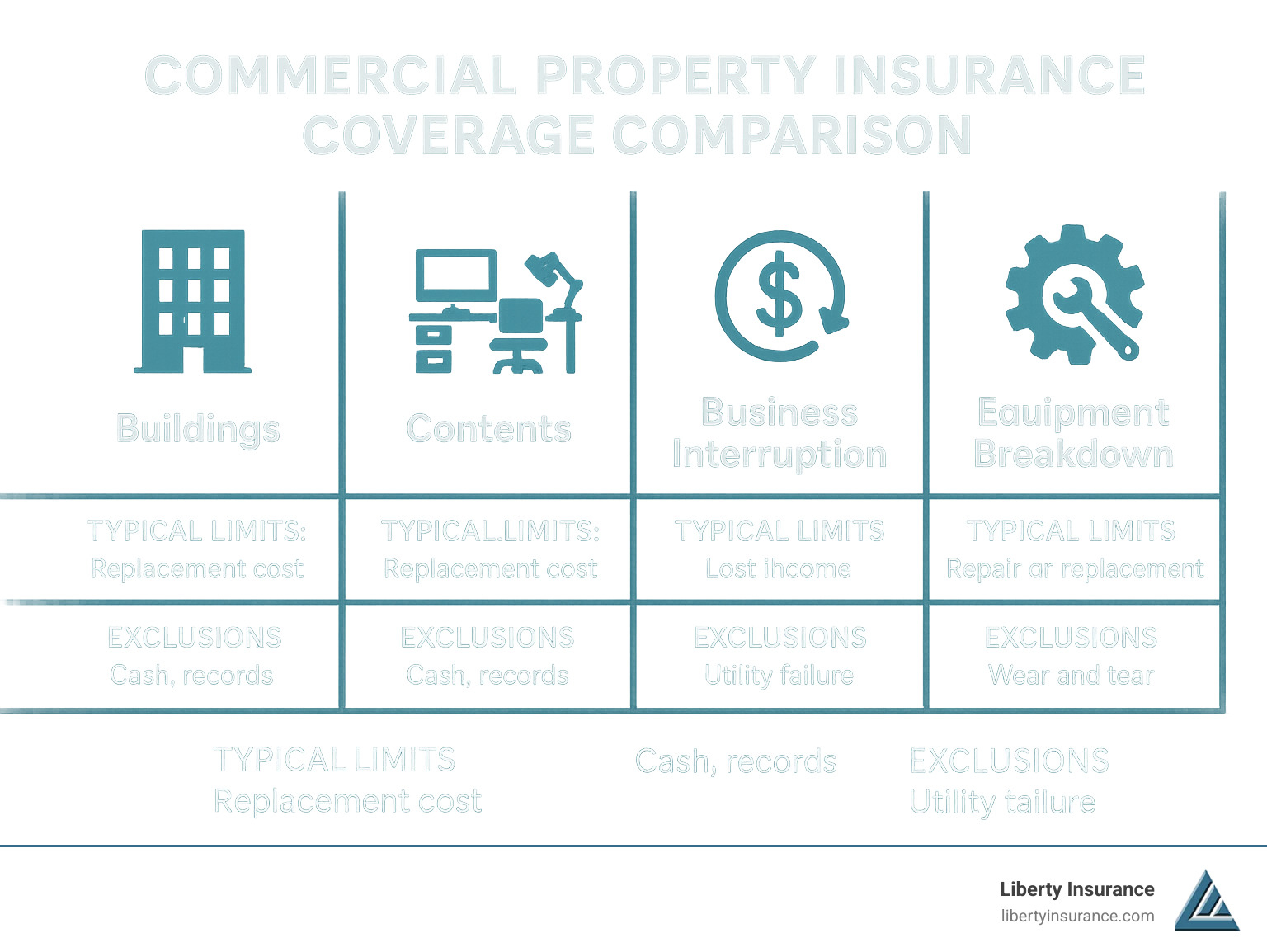
| Property Insurance | Buildings, equipment, inventory | Replaces or repairs damaged property | Based on property value and risk factors |
| Workers’ Compensation | Employee medical treatment and lost wages | Mandatory in most states, supports injured workers | Depends on payroll and industry |
| Professional Liability | Errors and omissions | Covers lawsuits due to professional mistakes | Depends on profession and claim history |
Matching Insurance to Your Business Needs
Every business has unique needs. For example, a tech startup might prioritize Professional Liability to guard against coding errors, while a restaurant may focus on General Liability to cover slip-and-fall cases.
Pro Tip: Always assess your industry-specific risks before purchasing insurance. This way, you avoid paying for coverage you don’t need, while ensuring vital protection.
Small retailers should consider Property Insurance for inventory protection, whereas construction firms must have Workers’ Compensation due to the inherent risks.
Step #1: Identify your industry risks. Step #2: Match those risks with the appropriate insurance types. This approach ensures you’re not just covered, but also strategically positioned for growth and stability.
Key Considerations When Choosing Insurance

Did you know that 40% of small businesses are uninsured? That’s a huge risk! So, how do you pick the right insurance for your business?
Choosing the right insurance is critical because it can mean the difference between surviving a disaster and going out of business. Here’s the deal: You need to know exactly what factors to look for when selecting an insurance policy.
Evaluate Coverage Needs
The first step is to understand what coverage your business truly needs. Start by assessing your risks. Do you operate in a high-risk industry? Are there specific legal requirements for insurance in your state? Answering these questions helps you determine your must-have coverages.
- Identify potential risks and liabilities.
- Consider industry-specific needs.
- Assess legal requirements.
Compare Providers
Not all insurance providers are created equal. You need to compare them based on coverage, cost, and customer service. Let’s break it down:
| Provider | Coverage | Cost | Customer Service |
|---|---|---|---|
| Provider A | Comprehensive | $$ | Excellent |
| Provider B | Basic | $ | Good |
| Provider C | Moderate | $$$ | Poor |
Pro Tip: Always check customer reviews and ratings before making a decision.
Checklist for Assessing Insurance Options
Here’s a simple checklist to help you evaluate and select the best insurance option for your business:
- Determine your business risk exposure.
- Identify mandatory coverages and optional add-ons.
- Compare at least three providers.
- Check customer reviews and claims process efficiency.
- Consult with an insurance advisor if needed.
Legal Requirements and Insurance
Did you know that in many places, not having the right insurance for your small business can land you in hot water? It’s true. Legal requirements for business insurance can vary wildly depending on where you are and what you do.
Here’s the deal: If you’re running a small business, you need to be aware of the insurance laws in your jurisdiction. These laws dictate what types of insurance you must have. And let me tell you, the stakes are high if you fail to comply. Not only are you risking hefty fines, but there’s also the threat of lawsuits that could cripple your business.
Examples of Mandatory Insurance for Certain Industries
For instance, if you’re in construction, you often can’t get started without General Liability Insurance. In healthcare, malpractice insurance isn’t just a recommendation; it’s a must-have. Many states also require Worker’s Compensation Insurance if you have employees.
- Construction: General Liability Insurance
- Healthcare: Malpractice Insurance
- Retail: Property Insurance
Pro Tip: Always check with your local government or a legal advisor to ensure you’re meeting all mandatory insurance requirements!
Consequences of Non-Compliance
Not adhering to these legal insurance requirements can lead to more than just a slap on the wrist. Fines can range from hundreds to thousands of dollars, depending on the infraction. Even worse, without the proper coverage, you could be personally liable for any accidents or damages that occur.
Ignoring insurance requirements isn’t just risky business—it’s a legal minefield. And remember, these rules aren’t uniform. They can change based on your state or even your city. So, always stay informed.
Variability by State or Region
In California, for example, Worker’s Compensation is required the moment you hire your first employee. Meanwhile, in Texas, the rules are more relaxed, but that doesn’t mean you’re off the hook. Local ordinances can impose additional requirements.
| State | Insurance Requirement |
|---|---|
| California | Mandatory Worker’s Compensation |
| Texas | Varies by county and industry |
The bottom line? Keeping up with legal insurance requirements is critical for running a successful and compliant small business.
Common Misconceptions About Business Insurance
Think small business insurance is just a safety net? Wrong. It’s more like a lifeline. Yet, many business owners are running on myths that can cost them big time.
Let’s set the record straight. These misconceptions often stem from outdated information, hearsay, or a simple lack of understanding. And they can lead to disastrous decisions. Here are some of the most common myths that you might believe.
Top Myths That Mislead Business Owners
Many business owners fall into traps of misinformation. The impact? They might end up overpaying or being underinsured. Here’s what you need to know:
- Insurance is only for big businesses.
- If you work from home, your homeowner’s policy covers your business.
- Once you have a policy, you’re fully covered for any event.
- Business insurance is too expensive for startups.
- Only businesses with employees need coverage.
Why do these myths stick around? Often, it’s because they seem logical and are repeated often. But here’s the deal: believing them can lead to serious financial pitfalls. Imagine thinking you’re covered, only to find out a claim is rejected. That’s a nightmare scenario for any business owner.
Pro Tip:
Always review your policy with a professional to ensure it meets all your business needs. Don’t just assume; verify and be confident.
Benefits of Bundling Insurance Policies

Ever wonder if you’re overpaying for insurance? It turns out, bundling your small business insurance policies could save you big bucks. Let’s break it down.
Bundling insurance policies means combining multiple types of insurance coverage under a single provider. This isn’t just convenient; it’s a money-saver too. By grouping policies like general liability, property, and business interruption insurance, you can often get a discount on your premium. Here’s the deal: insurance companies love when you simplify your coverage with them, and they reward you with savings.
Cost Savings and Other Benefits
When you bundle, you often get more than just a lower rate. You also benefit from streamlined service. Instead of juggling multiple insurers, you have a single point of contact for claims and questions. Imagine the time saved when you don’t have to explain your situation to three different customer service reps.
But the perks don’t stop there. Bundled policies can also mean fewer gaps in coverage. Since one insurer handles all your coverages, they can spot potential overlaps or shortfalls in your protection. No more guesswork about whether you’re fully covered.
Examples of Commonly Bundled Insurance Packages
So, what does bundling look like in practice? A common package for small business owners includes general liability, property insurance, and workers’ compensation. These are essential for nearly every business. Another popular combo is professional liability with cyber liability insurance – crucial for any business that handles sensitive data.
Pro Tip: Talk to your insurer about creating a custom bundle that fits your specific needs. You might be surprised by the options available.
Simplifying Insurance Management
Managing insurance can be a headache. But when you bundle, you consolidate your policies into a single, manageable package. This means fewer bills to pay and less paperwork to keep track of. Your renewals are synchronized, making it easier to plan for the year ahead. Plus, if you ever need to make a claim, dealing with one insurer simplifies the process enormously.
Bundling isn’t just about savings. It’s about making your life easier as a small business owner. Less hassle means more time to focus on what really matters: growing your business.
Summary
As you chart the course for your small business’s future, let insurance be your compass. It guides you through uncertain waters and ensures your enterprise doesn’t flounder when challenges arise. Remember, it’s not just about compliance or ticking a box; it’s about securing peace of mind and the longevity of your business. So, arm yourself with the right insurance, and let it fortify your journey toward success and stability.
Q&A
What are the three main types of small business insurance?
The three main types are General Liability Insurance, Property Insurance, and Workers’ Compensation Insurance.
Why is small business insurance important?
It protects against unforeseen events, ensuring business continuity and financial stability.
How can I determine which insurance my small business needs?
Evaluate your business risks, consult with an insurance expert, and consider legal requirements in your industry.
Can bundling insurance policies save money for small businesses?
Yes, bundling often offers discounts and simplifies management, saving both money and time.
Are there legal requirements for small business insurance?
Yes, these vary by jurisdiction and industry, with some insurances being mandatory to operate legally.
Is it expensive to have small business insurance?
Costs vary based on coverage and provider, but the investment helps avoid potentially crippling financial losses.
